The Abolitionist Case
Libertarians make compelling arguments for the urgent need to ensure the rights of individuals. Their work is persuasive. But when those same minds exempt an entire class of people from the protections their philosophy demands, they haven't applied their principles consistently. Certainly, they’ve applied them to their preferred cohorts and called it universal, but when those principles don’t extend to the most defenseless individuals among us, it’s merely a philosophy of the already-powerful dressed in liberty's clothing.
"If you don't have high respect for human life, you cannot have respect for liberty." - Ron Paul
Ron Paul ran for president as a Libertarian before it was fashionable, spent decades in Congress as a dissenting voice for genuine constitutional government, and brought more people to libertarian ideas than anyone in a generation. When he speaks about liberty, libertarians listen. Or they should.
When Ron Paul said, “If you don't have high respect for human life, you cannot have respect for liberty,” he was speaking about the rights of the unborn.
Liberty isn’t merely the absence of government interference. It’s a logical framework grounded in the recognition that all human beings possess inherent worth that cannot be justifiably violated. Remove that foundation and what you have left is merely license for protecting the preferences of whoever currently is in power, selectively granting protection to most and imposing harm on those thought to count for less.
Who Counts and Who Doesn’t?
An unborn individual is more than a philosophical abstraction. He’s a person at an early stage of development, possessing his own unique DNA, distinct from every other person on earth, including his mother. He is a living human with his own developmental trajectory.
When it comes to recognizing rights, a standard libertarian move in the abortion debate is to invoke bodily autonomy and stop there - a woman's body, a woman's choice. The Non-Aggression Principle protects her from compelled use of her body. But what about the other body involved? Does it count for less? When libertarians ignore the two bodies involved in an abortion in favor of only considering one of them, their calculation regarding bodily autonomy is incomplete. Pretending otherwise is avoidance of the full moral context.
Why Abortion Abolition and not Incrementalism?
Precision matters here, because libertarians should be clear and honest rather than strategically ambiguous. The position advanced in this piece is not pro-life in the incrementalist sense. It is abolitionist. The distinction is substantive.
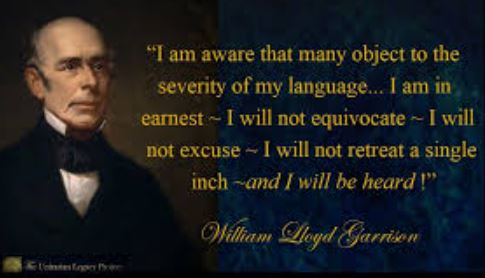
The pro-life movement, for all its good intent, has largely operated within a framework of accommodation, accepting regulatory half-measures and treating their goal as a gradual, often ineffectual, narrowing of access to abortion rather than the full recognition of unborn persons under law. Slavery abolitionists of the nineteenth century had a word for that approach. They called it gradualism, and William Lloyd Garrison spent his career explaining why it was inadequate. You can’t phase in the recognition of personhood. You either recognize it or you don't.
Slavery, though once legal, was the commission of grievous crimes against persons whose rights went unrecognized - kidnapping, rape, assault, homicide. Abortion is no different: it is the modern day mass atrocity that slavery once was. Abortion is the killing of persons whose rights go unrecognized, and when committed with intent and knowledge, that is murder. It doesn’t cease to be murder because prosecution is politically inconvenient or socially uncomfortable.
Libertarians don’t generally argue that murder should go unprosecuted on the grounds that prosecution is divisive. They do not say that we should restrict homicide incrementally. They don’t remain silent in order to wait for culture to catch up. They apply the law to the act based on intent, circumstance, and culpability, as the law has always done. There is no principled reason to treat the killing of unborn persons differently, except that we have not yet, as a society, fully reckoned with what they are.
We currently don’t give unborn persons equal protection under the law, and that reckoning may be slow in coming. However, both now - against abortion - and in earlier centuries - against slavery - abolition is the voice that doesn’t wait for the reckoning in order to speak out against grave systemic atrocities.
As Nevada moves toward one of the darkest days in its history - within months of constitutionally enshrining legal child sacrifice - the Libertarian Party of Nevada has an opportunity to say something true and principled that the major parties cannot bring themselves to say at all. We should take it.